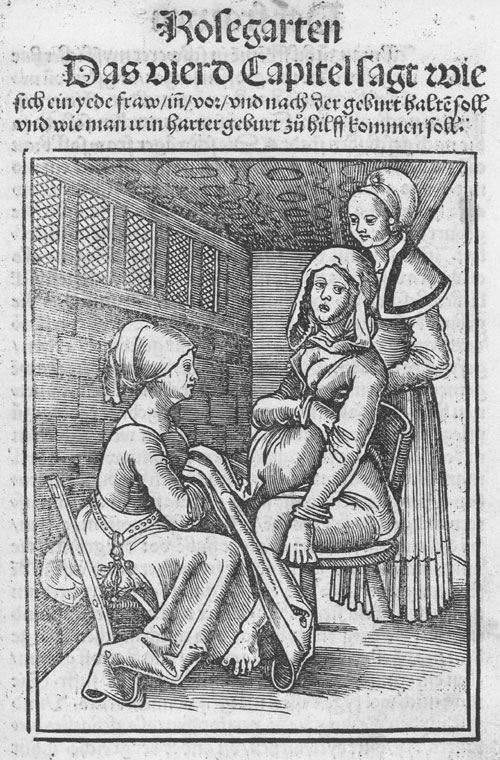
The concept of having an experienced companion (historically depicted as a woman) at the side of a birthing person in labor is as old as childbirth itself. Artwork depicting such scenes can be found in many cultures, dating back centuries. Birthing people have traditionally been supported by their community; it was not until [relatively] recent history that this tradition fell away (largely in the Global North) with the emergence of medicalized births and a shift to spousal support.
An analysis of 51 studies from 22 countries showed that continuous labor companions such as doulas appear to help women to have a more positive birth experience by fulfilling a number of roles, including providing informational support about the process of childbirth, bridging communication gaps between clinical staff and women, providing practical support, including encouraging women to remain mobile during labor, emotional support and non-pharmacological pain relief such as massage and meditation.
Labor companions act as advocates for the women, speaking up in support of her and her preferences and helping women feel in control and build their confidence through praise, reassurance, and continuous physical presence.
Positive Birth Outcomes: Duration, Pain, Interventions, APGAR Score
Randomized, controlled trials assessing the role of the doula show the following benefits:
- Shorter labors
- Reduced need for pain medication
- Fewer episiotomies
- Fewer operative vaginal deliveries
- Fewer cesarean sections
- Improved neonatal outcomes
- Better mother-infant interaction
- Improved breastfeeding rates
- Greater maternal satisfaction
In a randomized controlled trial of 600 women, the research team found that those who had the support of a doula had a significantly shorter length of labor, greater cervical dilation at the time of an epidural, and higher Apgar scores at both 1 and 5 minutes. There was also a trend toward lower cesarean delivery rates in the doula group.
Another study shows that after controlling for clinical and sociodemographic factors, odds of cesarean delivery were 40.9% lower for doula-supported births than not. Mothers are more likely to have a spontaneous vaginal birth and less likely to have pain meds or to report dissatisfaction. Again, their labors were shorter, they were less likely to have a caesarean, or instrumental vaginal birth, regional analgesia, or a baby with a low 5-minute Apgar score (source).
Positive Post-Partum Outcomes: Breastfeeding, Emotions, Role of Father
One study looking at new parents 6 weeks after delivery showed a greater proportion of doula-supported women were breastfeeding, reported greater self-esteem, less depression, higher regard for their babies and their ability to care for them compared to the mothers without doula support. Observations during labor showed that fathers remained farther away from mothers than doulas (when one was not present), and talked and touched less. However, when the doula was present with the couple during labor, the father offered more personal support. The father-to-be’s presence during labor and delivery is important to both parents, but it is the presence of the doula that results in significant benefits in the outcome.